 listicle
High Quality Lingerie for Curvy Bodies: 2026 Guide
Table of Contents
- What Makes High Quality Lingerie for Curvy Bodies Different
- How to Measure Bra Size Accurately for the Best Fit
- Best Plus Size Lingerie Brands for Support and Comfort
- Comfortable Lingerie for Curvy Women: Styles That Work
- Fabric Quality and Construction: What to Check
- Size-Inclusive Collections: Finding Your Range
- Confidence Through Fit: Why Sizing Matters
- Frequently Asked Questions
Last Updated: October 19, 2026
What Makes High Quality Lingerie for Curvy Bodies Different
Shopping for high quality lingerie for curvy bodies isn't about sizing down standard styles, fit, support, and construction change completely.
We know sizing is proportional engineering. A 42DD isn't a 36DD with more fabric: the band widens, cup projection deepens, the gore gets taller, and straps move wider apart to distribute weight.
Many mainstream brands just extend standard patterns. High quality lingerie for curvy bodies starts from scratch, with patterns designed for fuller figures.
How to Measure Bra Size Accurately for the Best Fit
Getting your actual bra size is the foundation for everything that follows. Most people wear the wrong size, often by multiple band or cup sizes, and measuring takes five minutes.
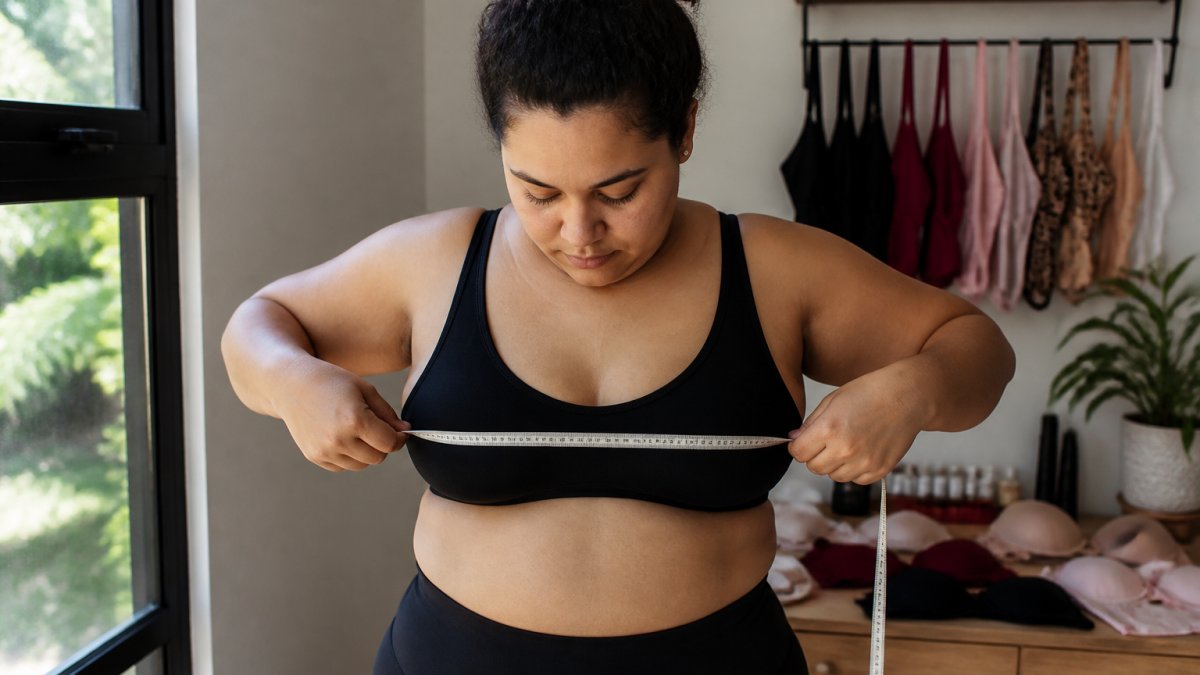
Band Size Measurement
Your band size is the circumference around your ribcage directly under your bust. Measure with a soft tape held snug but not tight, parallel to the ground.
Round to the nearest whole number: 34.5 inches becomes a 35 band, 34.2 inches becomes 34.
That number is your starting point, a 36-inch measurement means starting with a 36 band.
Cup Size Measurement
Cup size is the difference between your bust and band measurements. Measure around the fullest part of your bust wearing an unpadded bra or none.
Each inch of difference equals one cup size: a 37-inch bust on a 36 band is a 1-inch difference (B cup), 2 inches is a C cup, 5 inches is an F cup.
For fuller busts this matters more: a 42 band with a 50-inch bust is an H cup, with completely different proportions from a 36H.
Write down both measurements as your shopping baseline.
Best Plus Size Lingerie Brands for Support and Comfort
Each brand below is assessed on what matters for curvy bodies: band and cup range, how sizing runs, construction details, and trade-offs.
Torrid: Broad Range and Everyday Wear
Torrid designs specifically for plus-size bodies, carrying bands roughly 36-50 with cups up to H, plus panties in 00-6X.
What works: The range is genuinely broad, wireless, underwire, plunge, balconette, and full-coverage in the same size run, and consistent band construction makes reordering predictable.
Where to be cautious: Cup fit varies by style. Full-coverage and balconette run true, while plunge styles can gap at the top for softer tissue.
Elomi: Engineered Support for Full Busts
Elomi engineers specifically for fuller busts, with bands typically 34-48 and cups D-K (up to L in some styles).
What stands out: Construction. Elomi bras commonly feature a three- or four-part cup with a side support panel, taller firmer gore, wider straps, and multiple hook positions.
The consideration: The higher price reflects the engineering, but these are structured bras and feel like it, a poor fit for anyone who prefers a soft, unstructured feel.
Perky Lady Underthings: Focused Support Collection
Perky Lady Underthings builds its plus-size collection around support and comfort for fuller figures, emphasizing construction quality over trend-driven styles.
What works: The focus is narrow and deliberate, a support-first collection without fashion styles not engineered for fuller busts.
Where to be cautious: The size range is narrower than the mass-market brands above, so check each product page's band and cup range before assuming your size is available.
You & All: Matching Sets and Bralettes
You & All offers curvy lingerie including matching sets and bralettes, focused on wire-free options that still provide support.
What works: Wire-free bralettes for fuller figures are hard to engineer well.
Where to be cautious: Wire-free support has limits. At larger cup sizes, a bralette won't match the lift and separation of a properly fitted underwire bra.
How to Compare Brands Before You Buy
Use the same checklist across every brand:
- Size range specificity: Does the brand list band and cup combinations, or only XS-3XL? Band-and-cup sizing signals proportional engineering; letter sizing often signals scaled patterns.
- Construction details: Look for side support panels, multi-part cups, wider bands, and multiple hook positions. These are the features that distinguish engineered bras from scaled-up ones.
- Return policy: Confirm the brand accepts returns on bras and whether worn or washed items are excluded. Fit testing requires trying on, and a restrictive return policy raises the cost of getting it wrong.
Comfortable Lingerie for Curvy Women: Styles That Work
When shopping for comfortable lingerie for curvy women, you're balancing support with wearability. Different situations call for different styles.
Underwire Bras for Full Bust Support
Underwire bras provide the most support for larger cup sizes. The wire creates lift and separation that wire-free styles struggle to deliver, making underwire the most reliable option for full bust support.
The key is fit.
For curvy bodies, the band needs to be snug enough to prevent riding up but not so tight it digs in.
Wire-Free Bralettes for Everyday Comfort
Not every moment calls for underwire. Bralettes offer support without the structure, ideal for lounging, sleeping, or days when you want comfort without compromise.
For curvy bodies, wire-free bralettes work best when they feature adjustable straps, a wide band, and strategic seaming.
Pair them with a structured bra for occasions that need more lift, giving you flexibility and comfort throughout your week.
Matching Sets and Layered Silhouettes
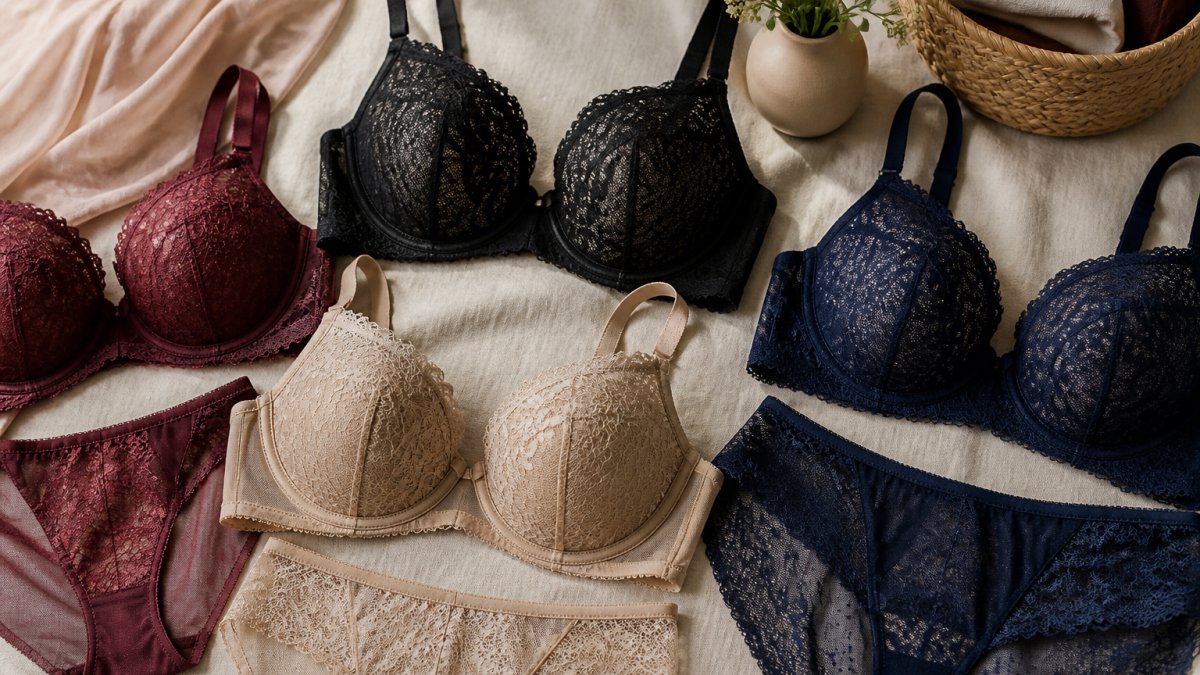
Matching sets create a cohesive look and simplify getting dressed. When the bra and panties are designed together, proportions, coverage, and support all align.
Layered silhouettes, camisoles over bralettes, robes over sets, add visual interest and versatility. A camisole designed for curvy bodies sits smoothly across your midsection without bunching.
These pieces work because they're engineered as complete sets, not afterthoughts.
Fabric Quality and Construction: What to Check
"High quality" is a claim every brand makes. Evaluate it through checkable details: fabric composition and weight, seam type and placement, hardware quality, lining, and support structure. These criteria let you assess a garment before you buy and after it arrives.
Fabric: Composition, Weight, and Recovery
Fabric content tells you how a piece will behave over time.
- Nylon-spandex blends are the standard for stretch and recovery in bras and panties. A higher spandex percentage (often 15-25% in bra wings and bands) means more stretch and better snap-back. Lower spandex content stretches out faster.
- Lace should feel substantial, not papery. Hold it up to the light: if you can see through it easily and the motifs feel fragile, it will likely snag and tear. Better lace has a denser ground mesh and clean, finished edges.
- Microfiber and modal offer a smooth hand and good breathability for everyday wear, but they show wear faster than nylon-spandex in high-stress areas like the band.
A practical test: stretch a section of the band or wing and release it. Good fabric snaps back quickly; limp fabric that stays stretched has poor recovery and will lose support within months.
Seams: Type, Placement, and Stress Points
Seams are where quality shows most clearly.
- Multi-part cups (two, three, or four pieces sewn together) create shape and support through construction rather than relying on the wire alone. A single-piece molded cup is cheaper to make but offers less projection and tends to collapse at larger sizes.
- Side support panels are vertical seams or fabric panels at the outer edge of the cup that pull tissue forward. This is one of the most reliable indicators of a bra engineered for fuller busts.
- Reinforced stitching at stress points, where straps attach, where the band meets the cup, and at the hook-and-eye closure, prevents tearing. Look for double-stitched or bar-tacked seams at these points.
Hardware and Closures
- Hooks and eyes should feel sturdy, align cleanly, and be sewn in with reinforced stitching. Flimsy hooks bend and eventually pull free.
- Multiple hook positions (three or more on a bra band) let you tighten the band as the elastic relaxes over time, extending the life of the garment.
- Adjustable straps with metal or sturdy plastic sliders hold adjustment better than thin plastic hardware. Wider straps distribute weight more comfortably across the shoulders.
Lining and Support Construction
- Lined cups add structure and opacity, and they help prevent show-through under clothing. Unlined lace cups are cooler but offer less support at larger sizes.
- Band construction matters more for curvy bodies than any other feature. A wider band (typically 1.5-2 inches on fuller-bust bras) distributes weight and anchors the bra. A narrow band concentrates pressure and rides up.
- Gore height and firmness affect separation. A taller, firmer gore keeps the cups apart and prevents spillage in the center.
Why Construction Matters More at Larger Sizes
A bra that works at a 36C may fail at a 42G because the load on the band, straps, and seams increases with cup volume. Scaled-up patterns keep the same band width, strap width, and seam count as smaller sizes, which is why they ride up, dig in, or lose shape. Engineered construction accounts for the load: wider bands, reinforced stress points, multi-part cups, and side support panels.
A Quick In-Hand Quality Checklist
When a piece arrives, run through these checks before removing tags:
- Stretch the band and confirm it snaps back.
- Inspect the cup seams, are there multiple parts, and is there a side support panel?
- Check the hook-and-eye closure for sturdy hardware and reinforced stitching.
- Look for exposed wire tips or raw elastic edges.
- Feel the interior seams for roughness or loose threads.
- Confirm the band width is proportionate to the cup size.
If a piece fails two or more of these checks, return it. Construction quality is the strongest predictor of how long a garment will hold its fit and support.
Size-Inclusive Collections: Finding Your Range
Size inclusivity means different things. Some brands offer extended sizes but use the same patterns. Others engineer specifically for fuller figures across their entire range.
True size-inclusive collections recognize that band sizes and cup sizes both matter. A 30F has completely different proportions than a 44F, even though both are F cups.
When shopping, look for collections that specify their size range prominently. If they carry XS through 3XL without specifying band and cup combinations, they're likely using scaled patterns.
Read reviews from people with similar measurements to yours.
Confidence Through Fit: Why Sizing Matters
The right size isn't just about comfort, it's about confidence.
Poor fit creates constant adjustments. Straps slip. Bands ride up. Cups gap or overflow.
Proper fit changes that. A correctly sized bra becomes invisible, supporting you without demanding attention.
This is why measuring accurately and trying multiple brands matters.
Finding high quality lingerie for curvy bodies means understanding that your size isn't just a number, it's a proportional system.
Frequently Asked Questions
What features should I look for in high quality lingerie for curvy bodies?
High quality lingerie for curvy bodies prioritizes support, comfort, and durability. Look for underwire bras with reinforced seams, adjustable straps that prevent shoulder slippage, and stretch fabrics that maintain their shape. Quality construction uses lace overlays on supportive mesh rather than thin materials. Full-coverage designs and matching sets offer both confidence and style. Check that the brand offers extended size ranges and uses high-quality fabrics that feel soft against skin while providing lasting elasticity.
How do I find the right bra size for a curvy figure?
Measure your band size by wrapping a soft measuring tape snugly around your ribcage directly under your bust. Round to the nearest whole number. For cup size, measure around the fullest part of your bust. The difference between bust and band measurements determines your cup size: each inch of difference equals one cup size. Always try multiple sizes, as sizing varies between brands and styles. A properly fitted bra should feel supportive without digging into skin.
Are there specific fabrics that provide better support for curvy bodies?
Yes. Lace combined with supportive mesh underneath provides breathability while maintaining shape. Look for materials with high-quality stretch that recovers well after wear, preventing sagging over time. Underwire construction with reinforced seams distributes weight more evenly across fuller figures. Avoid thin, delicate fabrics that lose elasticity quickly. Quality fabrics maintain their silhouette and coverage, which is essential for comfort and confidence in lingerie designed for curvy women.
What are the best styles of lingerie for enhancing curves?
Matching lingerie sets create a cohesive silhouette and boost confidence. Underwire bras with full-coverage cups provide lift and support while showcasing curves. Babydolls and camisoles with adjustable straps flatter fuller figures by skimming the body. Bralettes work well for everyday comfort, though curvy bodies typically benefit more from underwire support for all-day wear. High-waisted panties and robes complement curvy silhouettes by creating smooth lines. Layered designs add visual interest without adding bulk. Choose styles with strategic placement of lace to highlight your best features while providing the support your body needs.