 how-to
How to Measure Bra Size Accurately: Step-by-Step
Table of Contents
- What You'll Need Before You Start
- How to Measure Band Size at Home
- How to Measure Cup Size Accurately
- Using a Bra Size Calculator to Find Your Size
- How to Check Bra Fit After Measuring
- Common Measurement Mistakes to Avoid
- Troubleshooting Measurement Issues
- Frequently Asked Questions
Last Updated: October 10, 2026
What You'll Need Before You Start
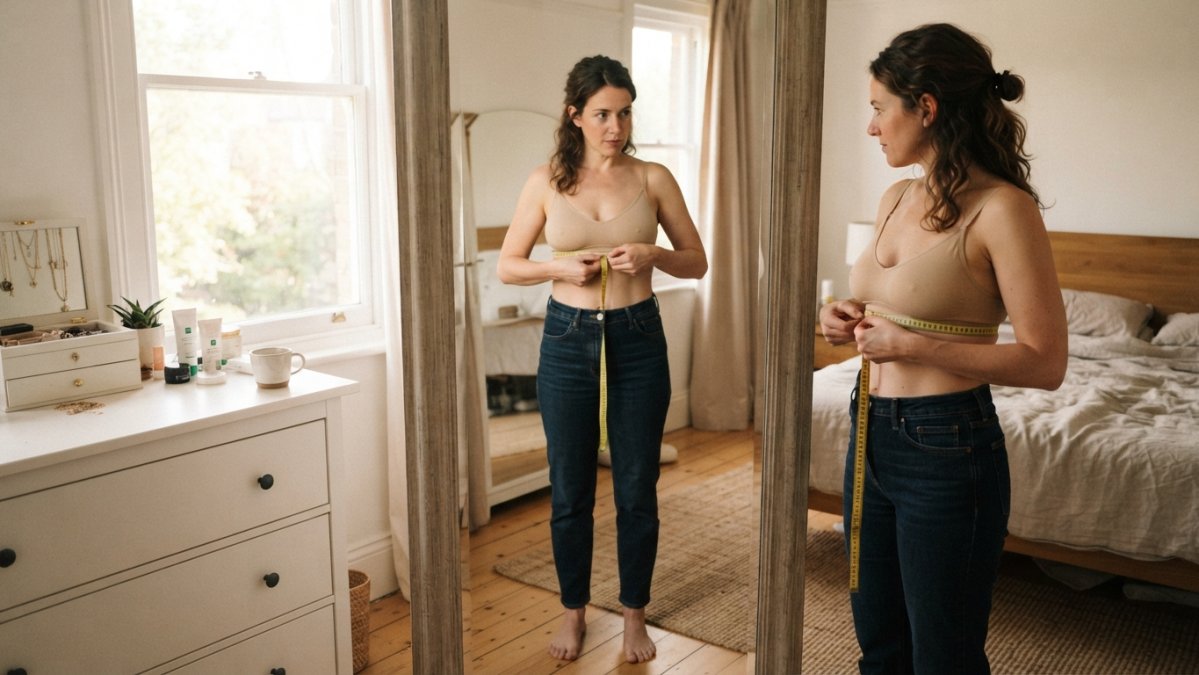
To measure bra size accurately requires just a few simple tools and the right conditions. You'll need a soft measuring tape (the kind used for sewing), a mirror, and ideally, someone to help you if possible. Wear an unlined or lightly lined bra without padding, or no bra at all for the most accurate measurement. Stand upright in front of a mirror in good lighting.
The environment matters too. Measure when you're relaxed, not right after exercise or when you're bloated. Many people find that measuring in the morning works best. Keep your measuring tape level and parallel to the ground throughout the process. This simple setup ensures you get consistent, reliable results that will help you find a bra that actually fits.
How to Measure Band Size at Home
Your band size is the foundation of proper bra fit. To measure your band size accurately, wrap the measuring tape snugly around your ribcage directly under your breasts. Keep the tape level and parallel to the ground, this is crucial. The tape should be snug but not tight. You should be able to slip one finger under it comfortably.
Write down this measurement in inches. This number is your band size. If you measure 32 inches, your band size is 32. If you measure 32.5 inches, round up to 33. Some people round down instead, but rounding up tends to give better support and a more comfortable fit.
How to Measure Cup Size Accurately
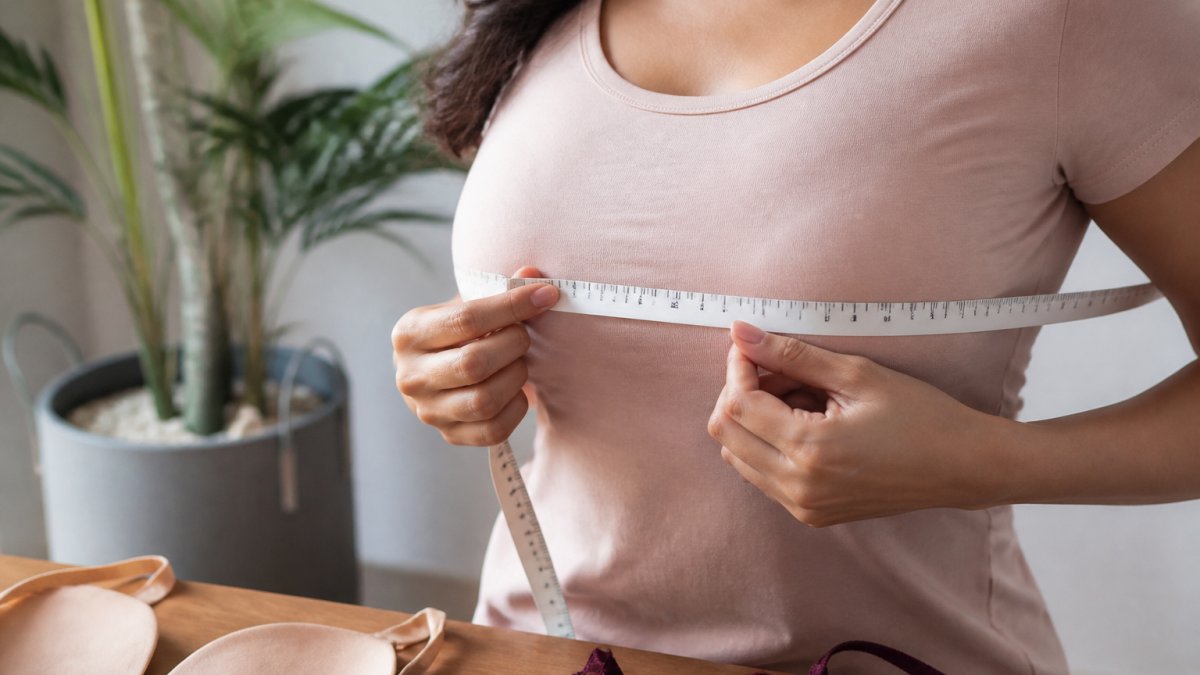
Cup size is determined by the difference between your band measurement and your bust measurement. Measure the fullest part of your bust while wearing an unlined or lightly lined bra. Wrap the tape around the fullest part of your breasts, keeping it level and parallel to the ground. Stand upright and keep your arms relaxed at your sides.
Write down this bust measurement. Now subtract your band measurement from your bust measurement. Each inch of difference equals one cup size. For example, if your band measures 32 inches and your bust measures 35 inches, the difference is 3 inches, which equals a C cup.
Here's how the cup size calculation works:
- 1 inch difference = A cup
- 2 inches difference = B cup
- 3 inches difference = C cup
- 4 inches difference = D cup
- 5 inches difference = DD cup
- 6 inches difference = E cup
Using a Bra Size Calculator to Find Your Size
Once you have your band measurement and your bust measurement, a bra size calculator can help you confirm your size. Many online calculators ask for these two measurements and instantly give you your bra size. This is a helpful double-check after you've done the math yourself.
However, it's important to understand that different calculators may produce different results, and different brands use different sizing conventions.
Verifying Your Size Against Brand Charts
After calculating your size, cross-reference it with the brand's official size chart before purchasing. Most manufacturers publish detailed sizing guides on their websites that show band measurements and cup measurements for each size.
To use a brand chart effectively:
- Locate the brand's size chart (usually under "Sizing" or "Fit Guide" on their website).
- Find your calculated band size in the chart and note the underbust measurement range listed.
- Compare that range to your actual underbust measurement. If your measurement falls outside the range, adjust your band size up or down accordingly.
- Repeat the process for cup size if the chart provides bust measurement ranges.
- If your measurements fall between two sizes, order both and compare the fit.
Why Calculators May Disagree
Calculators differ because the bra industry lacks a single universal sizing standard. European brands often size differently than brands based in North America.
Your calculated size is a starting point, not a guarantee. Think of it as a hypothesis to test against actual measurements and fit experience.
How to Check Bra Fit After Measuring
After you've calculated your size and tried on a bra, take time to check the fit. The band should sit level all the way around your body. If it rides up in the back, the band is too loose. If it digs in uncomfortably, it's too tight.
The straps should sit on your shoulders without slipping. You should be able to fit one finger under each strap comfortably. The cups should fully contain your breasts with no spillage over the top or sides. If you see bulging at the sides or top, you may need a larger cup size. If there's excess fabric in the cups, you may need a smaller cup size.
Comfort is the final test. Wear the bra for a few hours. Does it feel supportive without being restrictive? Can you move freely? Do you forget you're wearing it? These are signs of a good fit.
Common Measurement Mistakes to Avoid
One common mistake when you measure bra size accurately is wearing a padded or push-up bra. These bras change the shape and position of your breasts, giving you inaccurate measurements. Always measure in an unlined bra or no bra at all for the most accurate results.
Another mistake is measuring too loosely. The tape should be snug. If it's too loose, you'll get a band size that's too large, and your bra won't provide proper support. Conversely, measuring too tightly can make your band size smaller than it actually is, leading to discomfort.
Many people also forget to measure the fullest part of the bust. If you measure too high or too low, you'll get an incorrect cup size. The fullest part is usually at the nipple line, but this varies from person to person. Take a moment to identify where your fullest point is before measuring.
Troubleshooting Measurement Issues
If your measurements seem inconsistent or you're unsure whether you've measured correctly, systematic troubleshooting can help you identify the problem and get reliable results.
Tape Slippage and Uneven Positioning
One of the most common measurement problems is the tape slipping or rotating during measurement. If you measure multiple times and get results that vary by more than half an inch, tape slippage is likely the culprit.
To prevent slippage:
- Use a soft measuring tape, not a rigid ruler. Rigid tools cannot conform to your body and often slip.
- Measure in front of a mirror so you can see the tape position in real time.
- Ask a second person to hold the tape level while you stand still. A helper can ensure the tape doesn't twist or shift.
- Mark where the tape meets itself with a pen or your finger before reading the measurement, so you can verify the overlap.
- Measure the same location three times in succession. If all three readings match within 0.25 inches, your measurement is reliable.
Posture and Body Position
Your posture during measurement directly affects your results. If you slouch, lean forward, or twist your torso, your band and bust measurements will be inaccurate.
For consistent posture:
- Stand upright with your shoulders relaxed and your arms at your sides.
- Keep your chest open and avoid hunching forward.
- Look straight ahead, not down at the tape.
- Measure in the same location each time (e.g., always in front of a mirror, always at the same time of day).
- If you find it hard to stand still, have someone else take the measurements while you focus on maintaining neutral posture.
Hormonal and Cyclical Changes
Breast size and shape fluctuate throughout the menstrual cycle due to hormonal changes. Many people experience swelling and tenderness in the days before menstruation, which can shift measurements by up to half an inch or more.
To account for cyclical changes:
- Measure at the same point in your cycle each time (e.g., mid-cycle, when swelling is minimal).
- If you measure multiple times over several weeks and get different results, use the smallest band measurement and the largest bust measurement. This gives you a size that will fit across your cycle.
- If your measurements vary significantly (more than 1 inch), consider whether you're measuring at different times in your cycle, or whether other factors (weight changes, new exercise routines) are affecting your size.
Asymmetry and Uneven Breasts
Most people have breasts that are slightly different sizes.
For asymmetrical breasts:
- Measure around the fullest part of your larger breast.
- Use that measurement for your cup size calculation.
- When trying on bras, check that the larger breast is fully contained without spillage. The smaller breast may have slight extra fabric, which is normal and preferable to spillage.
- Some people find that a slightly larger cup size accommodates asymmetry better than a calculated size.
When to Remeasure
Remeasure your bra size if:
- Your weight changes by 10 pounds or more.
- You've been pregnant or are recovering from pregnancy (breast size often stabilizes 3-6 months postpartum).
- You've had breast surgery or significant body changes.
- You haven't measured in more than 1-2 years.
- Your current bras consistently fit poorly despite trying multiple sizes.
Do not remeasure if:
- You've only measured once or twice. Measure at least three times to establish a reliable baseline.
- Your measurements vary by less than 0.5 inches. This is normal variation and does not require a new size.
- You're measuring at different times of day or different points in your cycle. Standardize your measurement timing first.
Frequently Asked Questions
How do you measure your band size at home?
Wear an unlined or lightly lined non-push-up bra or no bra at all. Stand upright and wrap a measuring tape snugly (not tight) around your ribcage directly under your breasts. Keep the tape level and parallel to the ground all the way around your back. Write down this measurement in inches. This is your band size measurement, round to the nearest whole number.
How do you measure your cup size?
Measure around the fullest part of your bust while wearing the same unlined bra or no bra. Keep the tape level and parallel to the ground. Write down this measurement. Subtract your band size measurement from your bust measurement. Each inch of difference equals one cup size: 1 inch = A cup, 2 inches = B cup, 3 inches = C cup, and so on. This difference determines your cup size.
How can you tell if your bra fits correctly after measuring?
After calculating your size, try on the bra and check these fit indicators: the band sits level and parallel to the ground all the way around, the underwire or edge sits flat against your ribcage without digging in or riding up, the straps stay in place without slipping, and your breasts fill the cups without spillage or gaps. You should be able to fit two fingers snugly under the band at the back. If any of these fail, your size may need adjustment.
How often should you measure your bra size?
Measure your bra size at least once a year, or whenever your weight changes significantly, after pregnancy, or if your current bras no longer fit comfortably. Body changes affect both band and cup size, so regular measurement ensures you're wearing the correct size. Many women find their size changes over time, so annual checks help maintain proper fit and support.